India is full of diversity. You can’t explore the entire country in your single trip. So, to start with your first travel excursion, you can opt for the Golden Triangle India route. It is a well-known circuit that links three famous stops in North India: Delhi, Agra, and Jaipur.
This trip is short enough to manage, but it still packs a lot. You see centuries of change in a short time. You also pass major sites, and you get a real feel for daily life along the way. For many visitors from abroad, and for people seeing India for the first time, it works really well.
If this is your first trip to India, the Golden Triangle is one of the easiest ways to experience the country’s history, architecture, food, markets, and everyday life in a single journey. The classic route connects Delhi, Agra, and Jaipur and can usually be completed comfortably in around 6 to 8 days. You can also shorten the trip if you have limited time or extend it with destinations such as Ranthambore, Udaipur, Jodhpur, Jaisalmer, or Varanasi.
Key Sights on the Golden Triangle Route
Delhi: India’s Historic and Bustling Capital
Delhi is the capital, but it feels layered rather than simple. You can see Mughal roots and then turn and find busy modern streets. Visit places like Humayun’s Tomb and the Red Fort. Then head through Old Delhi and its tight lanes. Chandni Chowk is busy and full of spices. Here you can grab some street food while you walk.
Delhi is best experienced by dividing your sightseeing between Old Delhi and New Delhi. Old Delhi gives you a glimpse of the city’s Mughal history through the Red Fort, Jama Masjid, Chandni Chowk, and its narrow lanes. New Delhi offers attractions such as Humayun’s Tomb, Qutub Minar, India Gate, and the grand avenues of the capital.
For most first-time international visitors, two nights in Delhi provide a good balance. If your international flight arrives late or you want to explore the city at a relaxed pace, three nights can be even better.
Agra and the Mughal Legacy
Agra is one of the most important destinations on the Golden Triangle route. The Taj Mahal is the main attraction. Watching it at sunrise is a classic moment. The marble looks different as the light changes. Keep on going to visit Agra Fort. You can also visit Itimad-ud-Daulah, a detailed tomb that people often call the Baby Taj. There are numerous Monuments in Agra that are worth visiting.
Agra was one of the most important cities of the Mughal Empire, and its monuments offer some of the clearest examples of Mughal architecture in India. In addition to the Taj Mahal and Agra Fort, you can visit Mehtab Bagh for views across the Yamuna River and Itimad-ud-Daulah, often known as the Baby Taj.
One important planning tip for international visitors: the Taj Mahal is closed to visitors on Fridays. If seeing the Taj Mahal is one of the main purposes of your trip, check your itinerary carefully before finalizing your travel dates.
For a more relaxed experience, consider staying overnight in Agra rather than treating it only as a quick stop between Delhi and Jaipur. This also makes it easier to visit the Taj Mahal early in the morning.
Jaipur, the Pink City
Jaipur is famous as the Pink City. It shows Rajasthan’s Rajput heritage in a clear way. You see dusty rose buildings and wide views from its streets. The markets are active and loud, so walking through the bazaars is part of the experience.
Amber Fort rises over the city like a crown. It is known for mixing Hindu and Mughal styles. Nearby you can also see the City Palace. Hawa Mahal stands out too, with its many small windows that form the famous patterned front.
Jaipur deserves at least two nights on most Golden Triangle itineraries. The city has more to offer than its famous landmarks, including colourful markets, traditional crafts, local food, museums, and viewpoints.
A typical sightseeing day can include Amber Fort, Jal Mahal, City Palace, Jantar Mantar, and Hawa Mahal. If you have an additional day, use it for shopping, local food experiences, less-visited attractions, or simply enjoying the atmosphere of the Pink City without rushing from one monument to another.
This is the best way to explore India if you are planning a Golden Triangle trip.
Unmissable Detours Along the Way
Golden Triangle Tour feels richer because of the stops between the big towns.
Visit Fatehpur Sikri
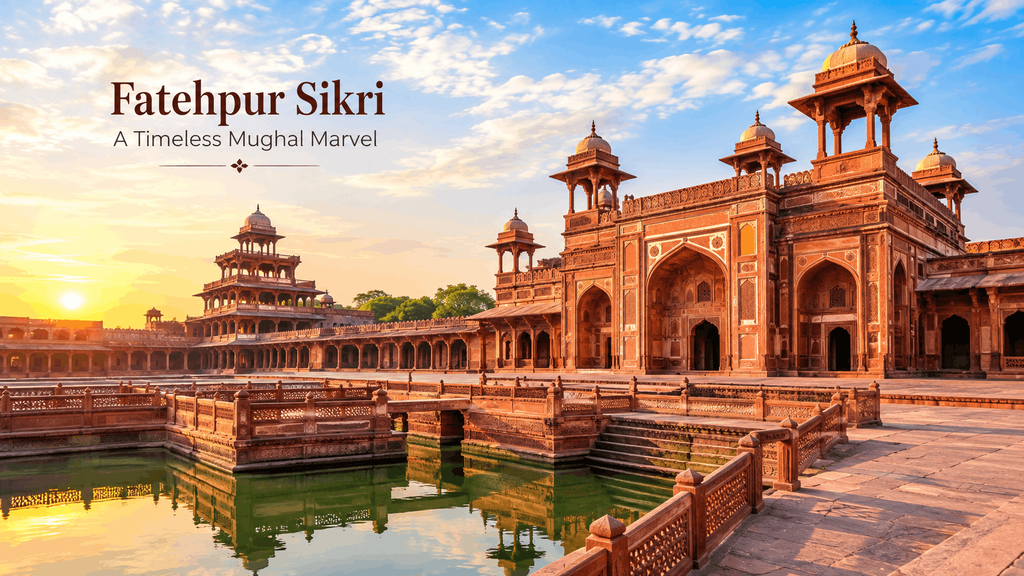
Fatehpur Sikri is one of those stops. It lies not far from Agra. The site is a well-kept ghost town made of red stone. It was used as a Mughal capital in the 1500s. Today, it gives a clear look at India’s older royal days.
Fatehpur Sikri works particularly well as a stop between Agra and Jaipur. Allow around 1.5 to 2 hours to explore the complex, depending on your pace. Its red sandstone palaces, courtyards, mosques, and royal buildings make it a worthwhile addition for travellers interested in Mughal history and architecture.
Track Tigers in Ranthambore
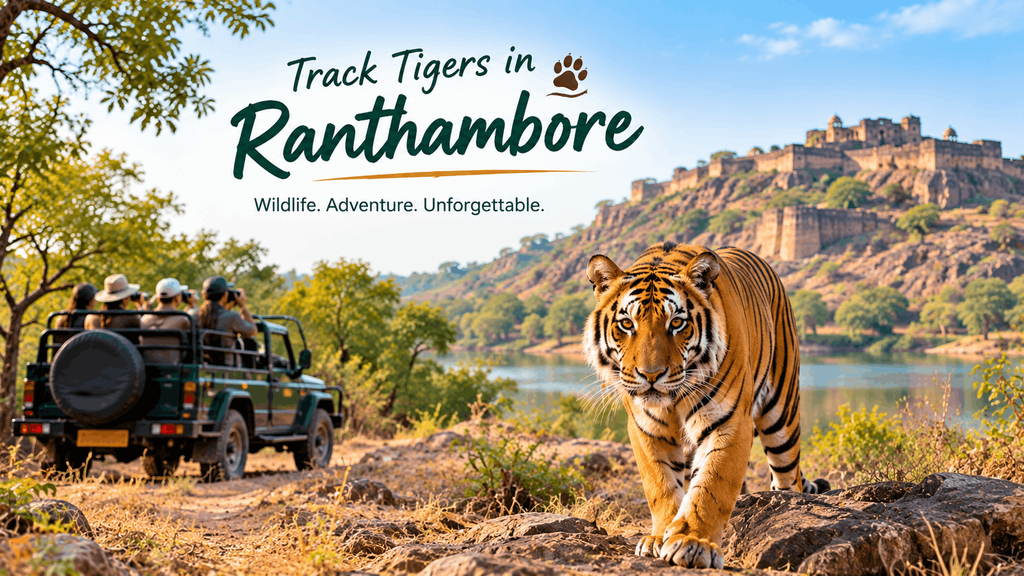
Ranthambore is a different kind of highlight and you must explore the Golden Triangle Tour with Ranthambore. Tiger tracking here is intense in the best way. Ranthambore National Park covers dry forest, rocky ground, and old ruins under the Ranthambore Fort. You may spot Royal Bengal tigers where they live, not in a staged setting. You go out on open-top Gypsy rides or Canter jeeps. The routes follow set areas. Guides and naturalists watch closely for signs like new paw marks. They also pay attention to sounds in the bush, like alarm calls from deer or monkeys. Dry riverbeds are checked again and again because animals often move there.
The best time to visit is from October to June. Late in spring can be especially good. During warmer days, wildlife tends to gather near water sources. That can help you see a tiger sooner.
Ranthambore is around 160 – 170 km from Jaipur and is generally added as a two- or three-night extension rather than a quick day trip. It is an excellent choice if you want to combine India’s historic monuments with wildlife.
Keep in mind that tiger sightings are never guaranteed. The excitement comes from exploring the natural habitat, following animal tracks, listening for alarm calls, and experiencing the national park itself.
Why Choose the Golden Triangle?
Picking an easy path through the Golden Triangle India Trip helps if you feel nervous about driving around India for the first time. When you book a planned trip, you do not have to handle every detail on your own. The stops link up well through newer roads, fast rail options, and hired cars. You get a clear schedule, but you still have small gaps to do what you want. In those gaps, you can try street chaat, sit down for royal thalis, and meet people in local, community-based projects. You also get a feel for India’s energy without rushing too much.
One of the biggest advantages of the Golden Triangle is its variety. Within a single trip, you can move from the busy streets of Delhi to the Mughal monuments of Agra and then into the royal heritage of Rajasthan in Jaipur. It gives first-time visitors a manageable introduction to India without requiring long domestic flights between every destination.
Where Is the Golden Triangle?
Golden Triangle India tour packages include the popular Golden Triangle that covers North India. The name comes from the shape on a map in which this trio – Delhi, Agra, and Jaipur forms a triangle.
The trip starts in Delhi. It then moves south along the Yamuna River toward Agra, in Uttar Pradesh. Agra is known for the Taj Mahal. The popular Taj Mahal facts make this place worth visiting. After Agra, the route goes west into Rajasthan, and then on to Jaipur. Jaipur is the “Pink City.” From there, the path turns back northeast to Delhi, so the loop finishes.
The approximate distances and road travel times are:
| Route | Approximate Distance | Typical Road Time |
| Delhi → Agra | ~230 km | ~3.5–5 hours |
| Agra → Jaipur | ~240 km | ~5–6 hours |
| Jaipur → Delhi | ~280 km | ~5–6 hours |
These times are approximate because traffic, road conditions, weather, and sightseeing stops can affect the journey. Do not plan your itinerary around an exact arrival time when travelling by road in India.
How Many Days Do You Need?
The ideal length depends on how quickly you like to travel. While it is possible to see the main highlights in only a few days, allowing more time will make the experience much more comfortable.
| Trip Length | Best For |
| 3–4 days | Travellers with very limited time |
| 5 days | A fast-paced first Golden Triangle trip |
| 6–7 days | A good balance of sightseeing and relaxation |
| 8–10 days | A more relaxed experience with additional activities |
| 9-12 days | Golden Triangle plus Ranthambore |
| 12–15 days | Golden Triangle plus additional Rajasthan destinations |
For most international first-time visitors, 6–8 days is the sweet spot. It gives you enough time for Delhi, Agra, and Jaipur without turning every day into a race between monuments.
Why Should You Spend Time There?
If you are planning a Golden Triangle trip in India, then do include this route in your Golden Triangle India Itinerary as it offers you a strong first look at the country’s past, its famous buildings, and everyday life that feels loud and full of colour. Many people can cover it in about a week to ten days without rushing.
Here are the main reasons this trip type stays popular with travellers:
The sights are hard to beat. You will see major stops in Delhi, Agra, and Jaipur. Old Delhi shows Mughal style. In Agra, the Taj Mahal draws most visitors for a reason. Jaipur brings Amber Fort on a hill and Hawa Mahal with its window patterns.
Getting around is easier than you might expect. The route has steady roads and trains, plus services made for tourists. City-to-city travel feels smooth, which helps if you are visiting India for the first time.
You also see more than monuments and historic buildings. In Jaipur, you can try local thalis that reflect royal meals. In Agra, some crafts still focus on marble work. You may even stay in restored heritage buildings instead of plain hotels.
If you want UNESCO World Heritage places, great food stops, or a simple way to see India’s changing life, this route can feel like a real trip, not just a checklist.
Golden Triangle by Car vs Train
Both private cars and trains can work well for a Golden Triangle trip, but the better option depends on your travel style.
| Private Car with Driver | Train | |
| Convenience | Excellent | Good |
| Flexibility | Excellent | Limited |
| Door-to-door travel | Yes | No |
| Stops between cities | Easy | Limited |
| Families/groups | Excellent | Good |
| First-time visitors | Excellent | Good |
A private car with a driver is particularly convenient if you want to visit places such as Fatehpur Sikri between Agra and Jaipur or make additional sightseeing stops. You also avoid navigating busy railway stations with luggage.
Trains can be an excellent choice for selected journeys, particularly when you want to save road travel time. However, there is no need to choose only one method. Some travellers combine trains for selected city-to-city journeys with private transfers and local sightseeing.
Best Time to Go
Plan your Golden Triangle India trip from October to March. In these months, the weather in North India stays mild. Thus, you can easily roam around and visit all the places.
October and November usually bring dry, bright days. Late winter, from February into March, is also pleasant and sunny. From May to June, the heat can be heavy. July, August, and September bring monsoon rains.
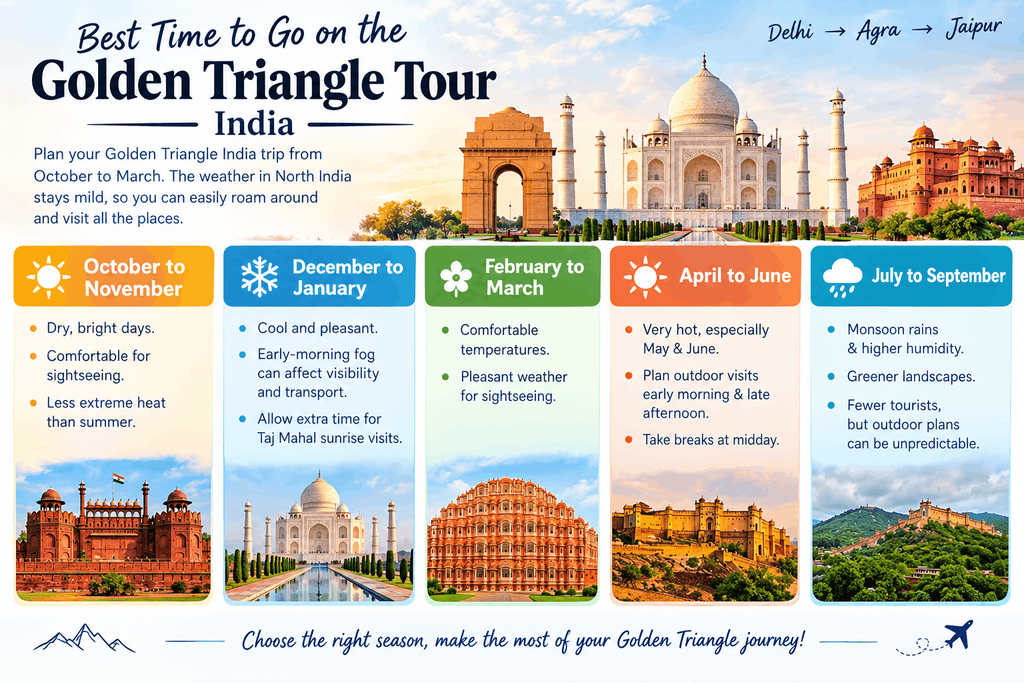
October to November
Generally a good period for sightseeing, with more comfortable conditions than the hotter summer months.
December to January
These months can be pleasantly cool, but early-morning fog can sometimes affect visibility and transportation in northern India. If you are planning a sunrise visit to the Taj Mahal, allow some flexibility in your schedule.
February to March
Often an excellent balance of comfortable sightseeing temperatures and generally pleasant weather.
April to June
Temperatures can become very high, particularly in May and June. If you are visiting during this period, schedule outdoor sightseeing for early morning and late afternoon and take breaks during the hottest part of the day.
July to September
The monsoon can bring rain and higher humidity. The landscape becomes greener, and there may be fewer tourists, but outdoor sightseeing can be less predictable.
Visa and Travel Health Preparation
If you are planning a trip to India, then cover Delhi, Agra, and Jaipur by opting for the Golden Triangle Trip package. Visa and health preparation comes first.
Visa and entry requirements depend on your nationality and can change, so check the latest official Indian government guidance before booking your trip. Give yourself enough time to complete the application process rather than leaving it until the last minute.
For health preparation, speak with a qualified travel-health professional before your trip. Recommended vaccinations and preventive measures depend on your personal circumstances, the destinations you are visiting, the length of your stay, and the activities you plan to undertake. Travel insurance is also strongly recommended for international visitors.
Safety and Hygiene
Food and drink safety matter day to day. Thus, ensure careful hygiene with water and meals. Drink bottled water and prefer purified water even for brushing your teeth. Keep hand sanitizer with you. Bring sunscreen with a high SPF, because glare from the sun can still feel strong.
Your packing should be practical. Always prefer wearing light and breathable cotton clothes with a pair of comfortable shoes. A pashmina or scarf is useful for covering shoulders and knees at religious places. If you go in winter, bring a warmer jacket. Also pack a sun hat and insect repellent.
Money and daily security need attention. However, the cost of travelling in India is not much, still you must carry local cash in small bills for easier purchases. Smaller notes can make lines move faster and can also help you stay low profile. Keep your phone and wallet in zipped pockets or places that are harder to reach. Bring the right power adapter and a portable charger so your devices stay usable during sightseeing.
Additional Tips for First-Time Visitors
India can feel overwhelming at first because of its traffic, crowds, noise, and fast-moving streets. Most visitors adjust quickly, but a few simple precautions can make your experience easier.
Use reputable hotels, tour operators, and transportation providers. Be cautious of unsolicited offers from people around major tourist attractions, particularly anyone claiming that a monument is closed or offering a special ticket or guide service. Confirm prices for taxis, tuk-tuks, guides, and other services before agreeing to them.
Keep your passport, visa documents, travel insurance details, and emergency contacts accessible. You should also keep digital copies of important documents in secure online storage or email.
When visiting temples, mosques, and other religious places, dress respectfully and follow the site’s photography and footwear rules.
Golden Triangle India Packing List
Packing for the Golden Triangle means you plan for comfort and for modesty. Pick light clothes that let air move, like linen or cotton. Bring a pashmina so you can cover your shoulders and knees at religious sites. Choose to wear closed-toe shoes as they will help in busy markets, and you may also want sandals for open grounds around sites like the Taj Mahal and Agra Fort. If you travel in winter, add a warmer jacket too.
Pack sun care items, sunglasses, and a cap to deal with weather changes. Also pack bug spray, hand sanitizer, and any medicines you need. Keep some local cash in small notes. Store it in closed zipper pockets that are not easy to access. This helps you pay for daily travel needs without stress. Bring a power plug adapter and a small charger so your phone and other devices last through long days of walking and sightseeing.
Quick Packing Checklist
– Lightweight cotton or linen clothing
– Comfortable walking shoes
– A scarf or pashmina for religious sites
– Warm layer for December–February
– Sunglasses and sun hat
– High-SPF sunscreen
– Insect repellent
– Hand sanitizer
– Personal medicines
– Universal travel adapter
– Portable power bank
– Small amount of local cash
– Copies of passport, visa, insurance, and important travel documents
What Should You Book in Advance?
A little planning can make a significant difference, particularly during the October–March high season. Consider booking the following before you arrive:
– International and domestic flights
– Hotels in Delhi, Agra, and Jaipur
– Private car and driver, if you prefer private transportation
– Popular train journeys
– Taj Mahal entry tickets
– Ranthambore safari permits and safaris if you are adding the national park
– Airport transfers
– Popular guides and special experiences
Ranthambore in particular can become busy during the main wildlife season, so leaving your safari arrangements until the last minute may limit your options.
Where to Go After the Golden Triangle?
You can start with Delhi, Agra, and Jaipur. You can keep on going if you want as there are a lot of options to explore on this route. If you like wildlife, think about Ranthambore National Park. It is a practical extension from Jaipur. Long ago, it was used as a royal hunting area. Today it is a top tiger reserve. Many visitors hope to see Bengal tigers while they are out in the open.
Want more in Rajasthan? Jodhpur is often called the Blue City. Jaisalmer feels like a desert fortress. Udaipur is known for its lake views. Each place brings forts, old customs, and a different mood.
You can also choose a change of pace. Head north to Varanasi, a spiritual centre on the Ganges. You can also go to Rishikesh to enjoy the calmness of the mountains.
Popular Extensions you need
If you have 10 days or more, adding another destination can make your India trip more varied:
– Ranthambore – Best for wildlife and tiger safaris
– Udaipur – Best for lakes, palaces, and a slower pace
– Jodhpur – Best for forts, blue-painted houses, and Rajasthan’s royal heritage
– Jaisalmer – Best for desert landscapes and a fort-city experience
– Varanasi – Best for experiencing one of India’s most important spiritual cities
– Rishikesh – Best for travellers interested in yoga, spirituality, and the Himalayan foothills
Frequently Asked Questions (FAQs)
1. Which cities are part of India’s Golden Triangle?
The Golden Triangle includes New Delhi, Agra, and Jaipur.
2. When is the best time to explore New Delhi and the Golden Triangle?
You can plan the trip from October to March. The days are cooler, so sightseeing is more comfortable.
3. How many days should you set aside for New Delhi?
Try for two to three nights. That gives enough time for key UNESCO sites, busy markets, and well-known cultural places.
4. What should you see in New Delhi?
You should look at the Red Fort, Humayun’s Tomb, Qutub Minar, Jama Masjid, Chandni Chowk, and India Gate.
5. What are the unmissable highlights of Agra and Jaipur on this route?
Agra and Jaipur are the key stops on this route. In Agra, most people go for the Taj Mahal and the Agra Fort. In Jaipur, Amber Fort, City Palace, Hawa Mahal, and Jantar Mantar are among the main attractions.
6. How do you move around the Golden Triangle cities?
Trains are a useful option for selected city-to-city journeys. Many international visitors also choose a private driver because it provides greater flexibility and door-to-door transportation. Public transport, including the Delhi Metro, can also be useful for getting around Delhi.
7. How many days are enough for a Golden Triangle trip?
You can see the main highlights in 4–5 days, but 6–8 days is more comfortable for most first-time international visitors. This allows enough time to explore Delhi, Agra, and Jaipur without rushing through every attraction.
8. Is the Golden Triangle safe for international travellers?
The Golden Triangle is a well-established tourist route, but first-time visitors should still use normal travel precautions. Choose reputable transportation and accommodation, keep valuables secure, and be cautious around busy tourist areas.
9. Is it better to travel by car or train?
Both options work. A private car provides more flexibility and makes stops such as Fatehpur Sikri easier, while trains can be convenient for selected city-to-city journeys. Your choice should depend on your budget, comfort level, and itinerary.==
10. Is the Taj Mahal open every day?
The Taj Mahal is closed to visitors on Fridays. Check the latest official visiting information before planning your Agra sightseeing day.
11. Can I add Ranthambore to my itinerary?
Yes. Ranthambore is one of the most popular extensions to the Golden Triangle for travellers interested in wildlife. Ideally, allow at least two nights so you have time for safari experiences rather than trying to fit the park into a rushed day trip.
12. What should I wear during trip?
Light and comfortable clothing works well for most of the year. When visiting religious sites, carry a scarf or other clothing that allows you to cover your shoulders and knees when required. Comfortable walking shoes are also essential because many sightseeing days involve substantial walking.
13. Can I explore the trip independently?
Yes, independent travel is possible. However, first-time visitors who prefer convenience often choose a private driver, organized tour, or a combination of trains and local guides. Having local support can make transportation, sightseeing, and itinerary planning easier.
Plan Your Golden Triangle Trip
The Golden Triangle is one of the best introductions to India for first-time international visitors. Delhi gives you the energy and history of the capital, Agra brings you face-to-face with the Taj Mahal and Mughal heritage, while Jaipur introduces you to Rajasthan’s forts, palaces, markets, and colourful culture.
The key to enjoying the route is not trying to see everything as quickly as possible. Give yourself enough time, build some flexibility into your itinerary, and choose transportation that matches your travel style.
Whether you have five days for the highlights or two weeks for a longer journey through Rajasthan and beyond, the Golden Triangle can be adapted to suit your interests, budget, and pace.
Want to plan your Golden Triangle Trip? Get in touch with Taj Destination Tours today!

Jumman Khan
Jumman Khan is the CEO of Taj Destination Tours with 15+ years of expertise in creating unforgettable travel experiences across India. Since 2017, he has guided 8,000+ travelers through customized Golden Triangle, Rajasthan, and luxury tour packages.