
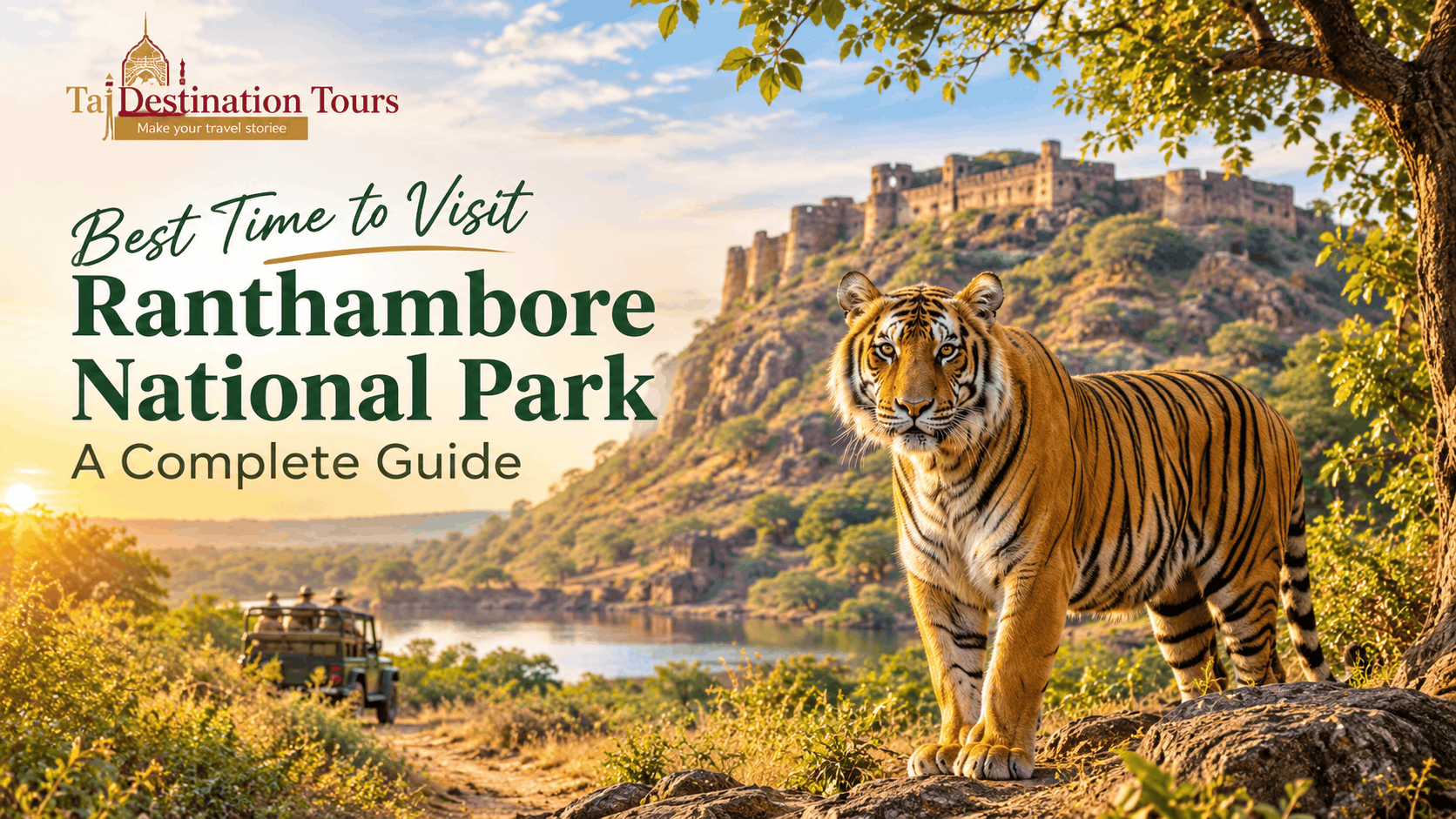
Ranthambore National Park sits where the Aravalli and Vindhya ranges meet in Rajasthan. It is one of India’s best known wildlife parks. Long ago, Maharajas of Jaipur used this land for hunting purposes. Today, the same area is protected as part of an important tiger conservation area. You can still see dry deciduous forests, bare rocky ground, and old ruins. The park is also home to the Royal Bengal Tiger.
If you plan a trip there, you have to think about more than dates. Weather can change how easy it is to travel. Some days may be closed. Tigers also move in different ways across the year. Plan ahead and you will get a better chance of seeing wildlife up close. Winter mornings can feel sharp and clear. Summer can be tougher, but tracking can be intense. Keep on reading to know the best time to visit Ranthambore national park.
For international travellers, the ideal travel dates depend on your priorities: comfortable weather, photography, birdwatching or a dedicated tiger safari. This guide explains what to expect in each season, when to plan your visit and how to prepare for a memorable wildlife experience.
Understanding the Seasons
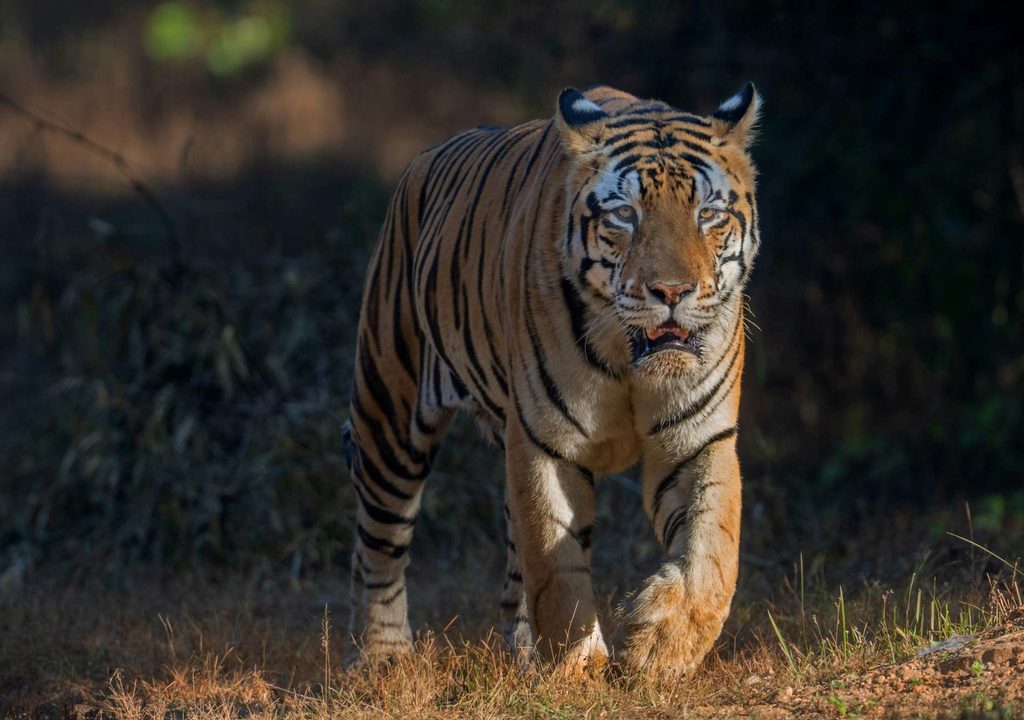
The park follows a set visiting window. It stays open from October 1 until June 30. July to September is the monsoon period, when access to the main tourist areas is generally restricted; check the latest official forest-department information before planning a visit during these months. Picking the best time to visit comes down to what you want the most. Some people want cooler comfort. Others focus on the best chances for tiger sightings.
1. Winter (October to February): The Peak Season of Comfort
Winter is the best time for many people who visit Rajasthan. In those months, the days are usually mild, around 20°C to 30°C. Nights can get cold fast, often near 10°C or even lower.
The sights can feel fresh and lively right then. After the monsoon, the land stays green for a while. Migratory birds also move in, and you may see them around the park lakes, such as Padam Talao.
There are trade offs. Trees and plants are thick, and water is present in many parts of the forest. Because of that, tigers may not gather in just one or two places. You might need to wait longer to spot them.
Plan ahead if you go. This is the busy time of the year, especially near Christmas and New Year. Try to arrange safari permits and stay at jungle lodges well before your trip as it is the best time to visit ranthambore tiger national park.
Planning tip: Winter is a busy period, particularly around Christmas, New Year and other popular holiday dates. Reserve your accommodation and safari permits as early as the official booking system allows. Pack warm layers for early-morning drives.
2. Spring and Shoulder Season (March to April): The Balanced Window
When winter starts to pass, March and April feel steadier. The deciduous trees begin to drop leaves. At the same time, the hills can brighten with orange flowers from the Palash, also called the Flame of the Forest.
You also tend to see more clearly in this period. The lower plants grow less dense, so sightlines improve. Daytime warmth stays in a workable range, roughly 25°C to 35°C.
Many wildlife visitors like these months for one main reason. The weather is still comfortable. Sightings of leopards and tigers also tend to be more frequent than earlier in the year.
Who should visit during this period? Spring is worth considering if you want to combine a wildlife safari with cultural sightseeing across Rajasthan and northern India. Carry sun protection and lightweight clothing, and check the forecast before departure.
3. Summer (May to June): The High-Stakes Season for Tigers
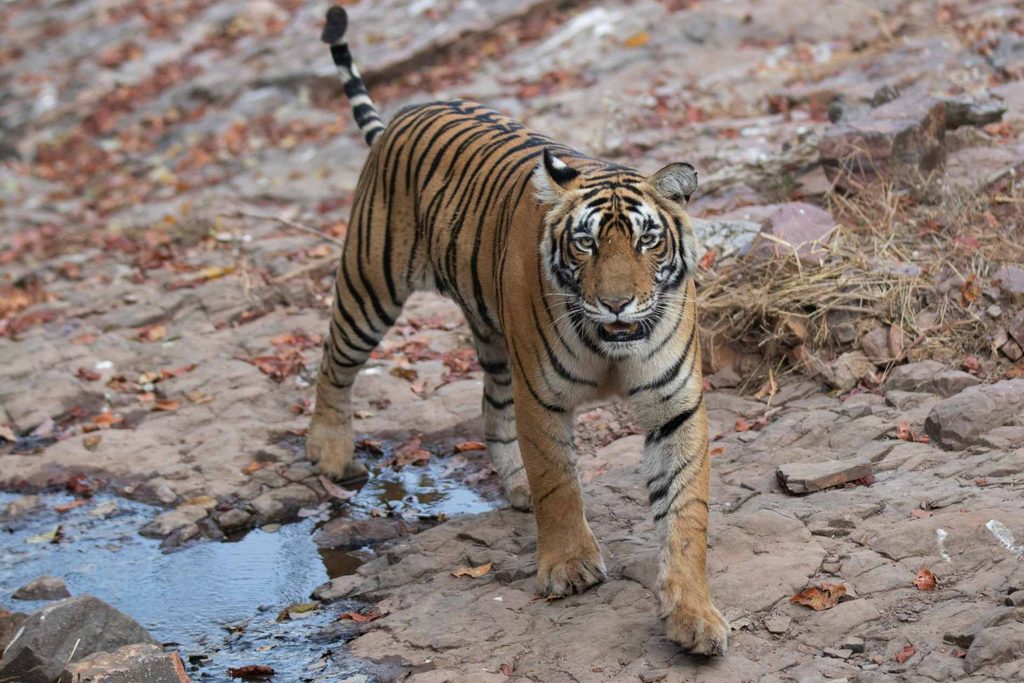
It is often well over 40°C, and the heat feels intense. Still, wildlife biologists and long-time safari guides say this is one of the best stretches to visit Ranthambore for people who really care about tigers.
Heat can change animal behavior fast. When the ponds and smaller water sites fade away, tigers and other wildlife use the water that is left. That means they show up more in open areas. For photos, this can be a strong time because the action is easier to spot.
However, tiger sightings are never guaranteed, even during the hottest months. Animal movements depend on several factors, including water availability, prey activity, habitat conditions and the individual animals’ behaviour.
If your main aim is to see and track these big cats, summer can help. Sightings are often more frequent during hot months. Also, fewer visitors come when the weather is harsh. As a result, safaris can feel calmer and more personal, which makes this time the best Ranthambore time to visit.
Who should visit during summer? Consider May or early June if tiger tracking and wildlife photography are your priorities and you are comfortable with high temperatures. Carry sun protection, wear breathable clothing and drink water as advised by your safari operator.
What Is the Best Month to Visit Ranthambore?
There is no single best month for every traveller. The following comparison can help you choose a period that suits your plans. Conditions vary each year, so use this as a general guide rather than a guarantee of weather or wildlife sightings.
| Month | What to expect | Best suited to |
| October | Post-monsoon landscapes and the beginning of the main safari season | Travellers seeking fresh scenery |
| November | Generally cooler conditions and pleasant sightseeing weather | First-time visitors |
| December–January | Cold early mornings and popular holiday travel dates | Comfortable daytime exploration, with warm layers for safaris |
| February | Cooler conditions gradually give way to warmer weather | Wildlife and cultural itineraries |
| March | Increasing warmth and potentially clearer views in some areas | A balance of sightseeing and wildlife |
| April | Hotter conditions and changing vegetation | Travellers comfortable with rising temperatures |
| May – June | Intense heat and potentially rewarding wildlife viewing near water sources | Dedicated wildlife enthusiasts and photographers |
Before finalising your dates, check the official safari calendar, available zones and current weather forecast. Safari access and timings can change according to the season and forest-department rules.
Crafting the Ultimate Itinerary: Beyond the Jungle
Many international visitors include Ranthambore as part of a longer holiday in northern India. Most travelers try to link their wildlife days with well known cities and culture. This leads to an easy plan for a multi stop holiday.
One common start is New Delhi. Many travelers land there first, then move on to Rajasthan. The best time to go New Delhi lines up with the high season for Ranthambore, from October through March. During this window, the weather is cooler and it is easier to walk around.
You can spend time at Red Fort, Qutub Minar, and Humayun’s Tomb without feeling wiped out. In the Old Delhi area, winter evenings make street food stops more enjoyable. Lodhi Gardens is also nicer to visit in that cooler, hazy season.
If you are planning a multi-city trip, allow enough time for travel between destinations and avoid scheduling a long road journey immediately before a safari.
Continuing to the City of Taj: Things to See in Agra
A quick stop in Uttar Pradesh can make a northern trip feel complete. If you are mapping out what to see in Agra, start with the Taj Mahal at sunrise. After that, walk through Agra Fort, built from red sandstone and packed with history. Then take time for Itimad-ud-Daulah, a smaller but very detailed site that people often call the Baby Taj. Finish the day at Mehtab Bagh, where the gardens look out toward the Yamuna River and the light near sunset looks great.
- Many people join it with a trip called the Golden Triangle Tour with Ranthambore. This route connects Delhi, Agra, and Jaipur first. After that, the trip heads toward Sawai Madhopur for a tiger safari.
- Plan your travel from October to April. During this stretch, Delhi can feel cool and foggy at times, Agra feels full of charm, Jaipur looks grand in clear skies, and Ranthambore is easier to enjoy with calmer weather.
Essential Tips for Your Ranthambore Safari
Ranthambore safari vehicles run under tight rules. Jeep permits for six people and canter permits for twenty people start around 90 days early. For busy days, they can disappear fast.
Know the safari areas first – The park has several zones. Zones 1 to 6 often get more tiger sightings. Some newer zones still bring strong chances to see wildlife.
Plan what to bring – Wear light cotton clothes in plain shades like khaki, olive, or brown. Use sunscreen with high SPF. Bring sunglasses. Also pack binoculars or a solid zoom lens if you want photos.
FAQs
What is the best time to visit Ranthambore National Park?
October to March is generally a good choice for comfortable weather and a combined wildlife-and-culture holiday. April to June may suit travellers who prioritise wildlife viewing and can manage intense heat.
Is summer a good time for a tiger safari in Ranthambore?
Yes, summer can be rewarding because animals may visit remaining water sources more often. However, temperatures can exceed 40°C, and tiger sightings are never guaranteed.
Is Ranthambore National Park open during the monsoon?
The main tourist safari season generally runs from October to June. Access to specific areas during the monsoon may differ.
Can I combine Ranthambore with the Golden Triangle?
Yes. Ranthambore can be combined with Delhi, Agra and Jaipur in a multi-day itinerary. Allow enough time for road or rail transfers, overnight stays and the early start required for many safaris.
Final Thoughts
Ranthambore has two very different seasons. Winter feels cool and green. Summer can be hot and harsh. Either way, you can go out hoping for a tiger in the wild, and the trip tends to stick with you long after you return.
The best time to visit Ranthambore National Park is ultimately the period that matches your priorities, comfort level and travel plans. Keep realistic expectations about tiger sightings and allow enough time to enjoy the forest at its own pace. Whether you visit as part of a wildlife-focused holiday or a wider Golden Triangle journey, thoughtful planning will help you make the most of your time in Rajasthan.

Jumman Khan
Jumman Khan is the CEO of Taj Destination Tours with 15+ years of expertise in creating unforgettable travel experiences across India. Since 2017, he has guided 8,000+ travelers through customized Golden Triangle, Rajasthan, and luxury tour packages.