Planning a trip to India’s capital takes some thought, mostly because the weather swings a lot. In winter you may feel cool air, and in summer the heat can feel brutal. Pick the wrong time and you might lose hours to cold mornings or afternoon storms.
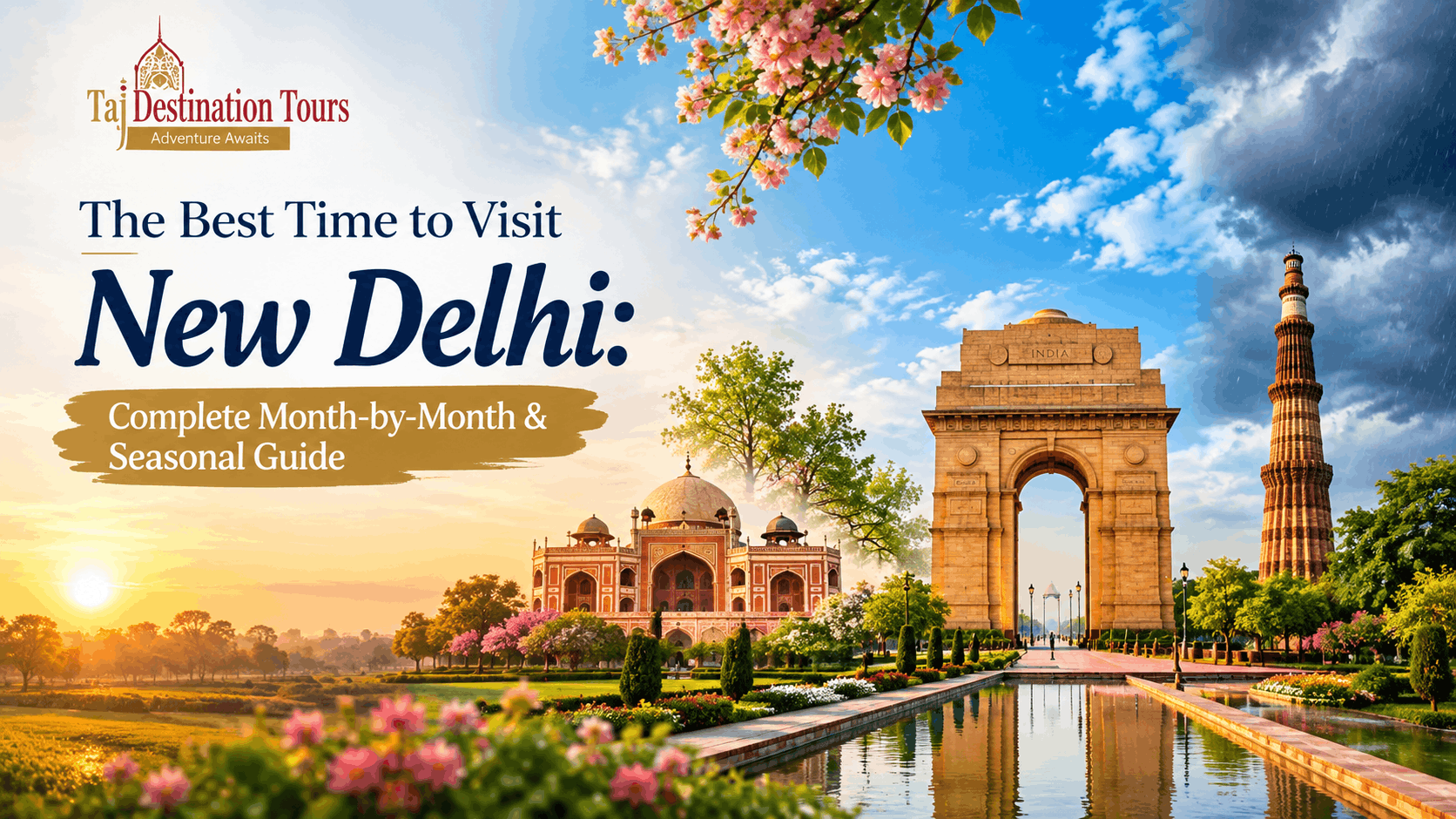
For most international travellers, October to March is the most comfortable period to visit New Delhi. However, the best month depends on what you want from your trip. November and February are particularly good choices for comfortable sightseeing, while October and March can be appealing for travellers interested in festivals and a transition between seasons. May and June are generally the most challenging months because of the intense heat.
If you are visiting Delhi for the first time, you should also consider more than just temperature. Fog, air quality, rainfall, humidity, festivals, crowds, accommodation prices and your plans to travel to Agra and Jaipur can all affect which month is best for your trip.
Choosing the Best Time to Visit by Season
Winter (December to February)
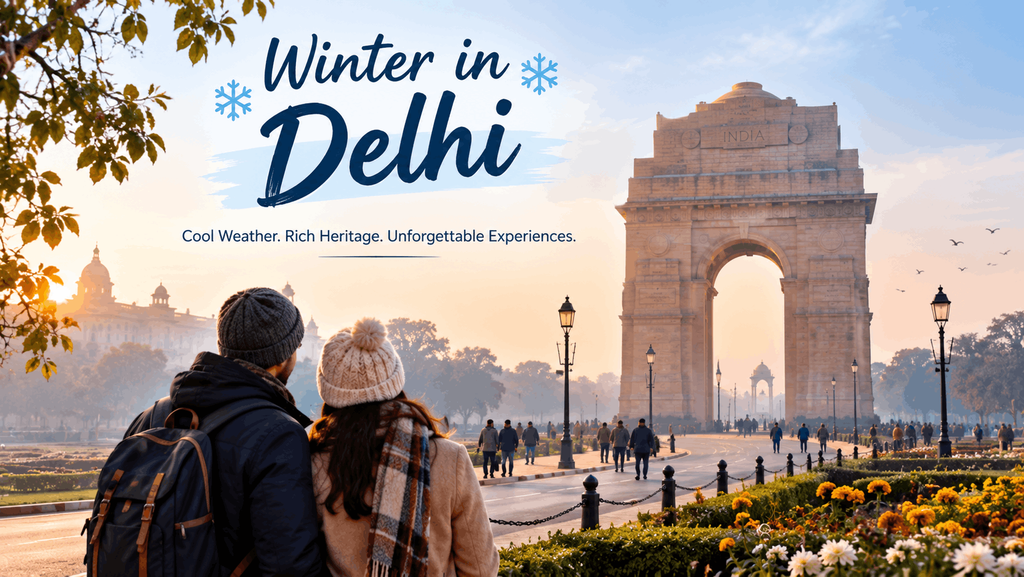
This season is often the easiest time to travel. Days are usually mild, with highs around 15°C to 25°C (59°F to 77°F). October and November are calm and bright whereas December and January can be quite chilly with dense fog at night. By the arrival of February and March, the days get clearer. Consider this the best season to visit New Delhi.
Delhi Tourism also identifies October to March as the city’s preferred visiting period, while official climatological data shows average maximum temperatures of about 20°C in January, 24°C in February and 30°C in March.
For international visitors, winter is particularly suitable for exploring Delhi’s major monuments, markets, gardens and historic neighbourhoods because you can spend more time outdoors without dealing with the extreme summer heat.
Things to do:
During this time, you can visit the popular monuments like Red Fort and Qutub Minar. Also, you can roam around Old Delhi and savour the delicious street food.
Winter is also a good time for heritage walks, photography, outdoor markets and combining Delhi with Agra and Jaipur as part of a Golden Triangle itinerary.
Takeaway:
If you want to enjoy pleasant sightseeing, then you must choose November through February as your time to visit.
If you are travelling in January, keep in mind that early mornings can be foggy. Fog may reduce visibility and can sometimes affect road, rail and flight schedules, so it is sensible to keep your sightseeing and intercity travel plans flexible. Official IMD climatological data records a higher frequency of fog days in January than in most other months.
Summer (April to June)
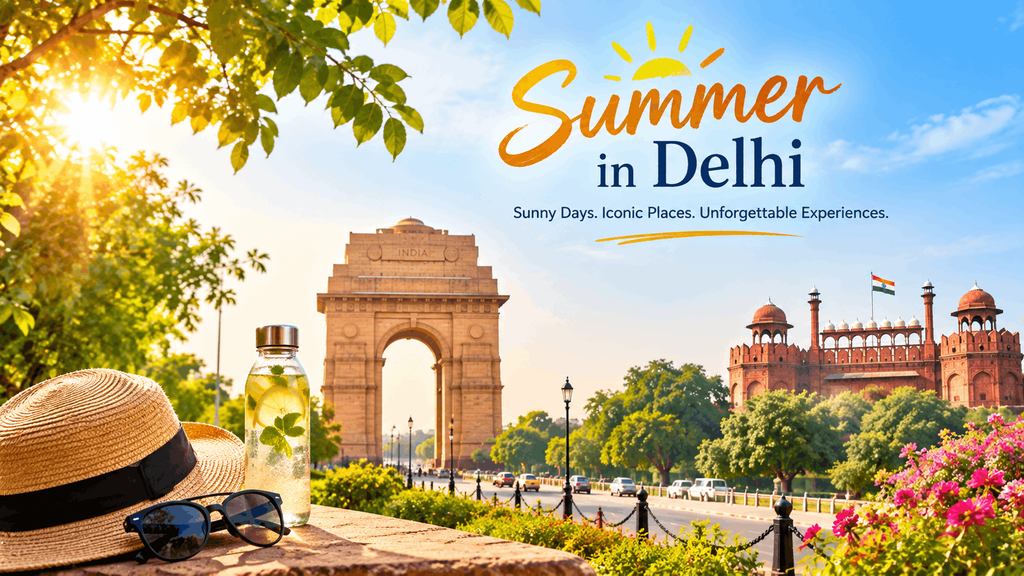
Warm weather turns intense fast. In May and June, temperatures often push past 40°C to 45°C (104°F to 113°F). Hot dry winds, often called the Loo, can make midday walking feel hard. You need more water and you should limit long trips outside.
April is a transition month and is generally more manageable than the peak heat of May and June, although temperatures can still rise considerably. Official Delhi climate data shows average maximum temperatures of around 36.5°C in April, 39.9°C in May and 39°C in June at Safdarjung.
Things to do:
Some hotels offer lower rates during this season. You may also notice fewer people at well known sights.
If you have to visit Delhi during the hotter months, plan outdoor sightseeing for the early morning or later afternoon and use the hottest part of the day for museums, indoor attractions, restaurants or a break at your hotel. Wear lightweight, breathable clothing, use sun protection and stay well hydrated.
Takeaway:
For most travelers, this stretch is the hardest time to visit New Delhi because of the strong heat.
May and June are particularly challenging for travellers who are not accustomed to very hot weather. If you are sensitive to heat, this is the period I would generally recommend avoiding for a sightseeing-focused holiday.
Monsoon (July to September)
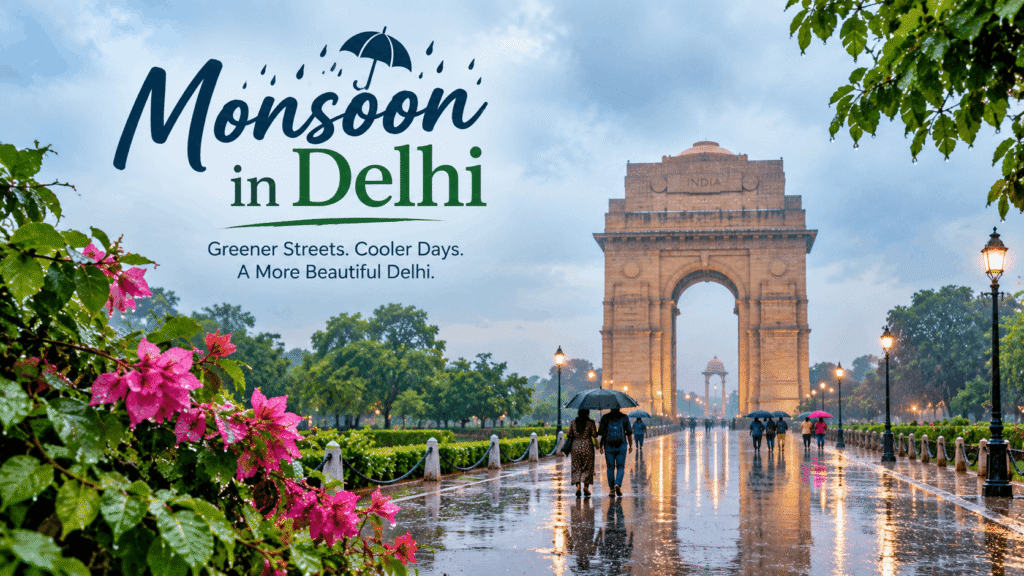
Monsoon season in Delhi is usually filled with humidity and a lot of rain. It remains from July to September and you might experience consistent rain and wet air throughout this time. Temps often hover near 30°C to 35°C, which is about 86°F to 95°F. Still, the air gets thick and sticky. Showers can be strong and come on fast. That can lead to flooded patches and slow traffic in many parts of the city.
Official climate records show that July and August receive considerably more rainfall than the preceding months, making rain and humidity important factors when planning outdoor sightseeing.
What you will notice?
Green cover looks fuller in parks and gardens. You may also see heavy cloud cover above older landmarks.
The monsoon is not necessarily a reason to avoid Delhi. Travellers who do not mind humidity and occasional heavy showers can benefit from greener surroundings, fewer tourists at some attractions and potentially lower accommodation prices.
The Bottom line
This period can work for travelers on a tight budget. Just plan for quick downpours and high humidity.
Keep some flexibility in your itinerary during the monsoon. A sudden downpour can make road journeys slower, so avoid planning several outdoor attractions back-to-back without allowing extra travel time. Carry a compact umbrella or rain jacket and choose footwear that can handle wet conditions.
Best Time to Visit New Delhi at a Glance
If you want a quick answer, use this guide:
| What you want from your trip | Recommended time |
| Best overall weather | November to February |
| Best for sightseeing | November and February |
| Best for comfortable Golden Triangle travel | November to February |
| Best for festivals | October–November and March, depending on the festival |
| Fewer tourists / potentially lower prices | Monsoon months |
| Best for avoiding extreme heat | November to February |
| Period to avoid if you dislike intense heat | May and June |
| Good transition season | October and March |
There is no single “perfect” month for every traveller. Your ideal travel window depends on whether your priority is weather, festivals, budget, fewer crowds or a wider India itinerary.
Season Notes
What is the best month to visit?
Most people find October to March the easiest. The days feel cooler and more comfortable. If you want to enjoy heritage walks and outside meals or market hopping, then this is the best time.
For a first-time international visitor, November and February are especially attractive because they generally provide a comfortable balance for sightseeing and outdoor exploration. October can still be warmer during the day, while December and January can bring colder mornings and fog.
Which month is best for sightseeing?
November and February are often considered the best time for sightseeing. After the summer heat, November feels milder. February brings bright skies and warm afternoons. Evenings are pleasant, and gardens look good. The dense fog that shows up in mid January is not common then.
March can also work well if you prefer warmer afternoons and want to travel before the peak summer heat arrives.
When is the Worst Time to Visit?
May and June tend to be the hardest months. Heat stays intense. Sun exposure is strong. Dry hot winds can make daytime travel tiring.
April can also become uncomfortable as temperatures rise, but it is generally less extreme than May and June. If your itinerary involves long outdoor sightseeing days, these hotter months require more careful planning.
Best season on a budget?
If you want cheaper stays and flights, late monsoon is one option. August to September can be a decent window. Early summer in April can also help if you prefer less rain and still want lower costs.
However, prices vary by hotel, festival dates and demand, so compare your actual travel dates rather than assuming one season will always be the cheapest.
Delhi Weather Month by Month
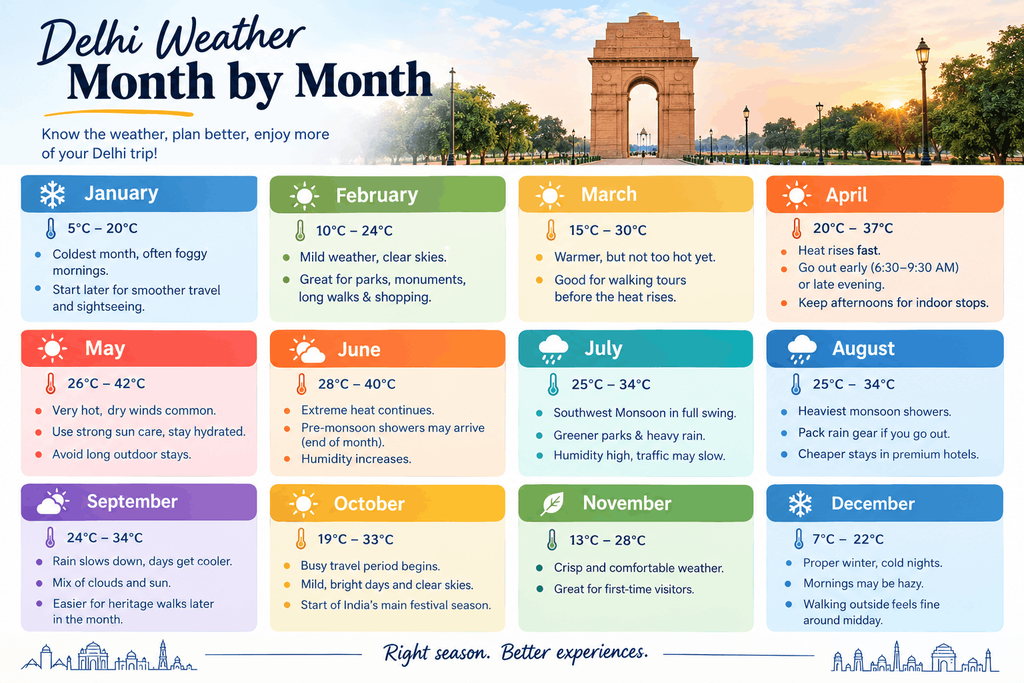
If you follow Delhi’s weather from month to month, it is easier to plan your days around the more comfortable hours.
The temperature figures below should be treated as typical climate conditions rather than guarantees. Delhi can experience unusually hot, cold, rainy or foggy periods in individual years.
January
Temperature typically ranges between 5°C to 20°C. Winter is at its coldest here. Mornings often bring thick fog. Sightseeing works well if you start later, since early travel can be slow.
January can be a good month for visitors who do not mind cool mornings. Plan outdoor sightseeing for later in the morning when possible, and allow extra time for travel because fog can affect visibility and transportation.
February
Temperatures sit near 10°C to 24°C. Days feel mild and the sky is often clear. This is a good time for parks, monuments, and long walks. Markets are also pleasant for shopping outside.
For many first-time international visitors, February is one of the strongest choices because the weather is generally comfortable for spending long periods outdoors.
March
Temperature is expected around 15°C to 30°C. The city warms up but it is not too hot yet. It is a solid month for walking tours before the hot stretch begins.
March is a useful shoulder-season option if you want warmer days without the peak heat of May and June.
April
The temperature ranges from 20°C to 37°C. Heat rises fast. If you want to be outdoors, go early, from 6:30 AM to 9:30 AM. Late evenings also help. Afternoon plans are better kept for indoor stops.
April is best approached as a transition into Delhi’s hotter season. If you visit during this month, keep your outdoor sightseeing flexible and avoid long walks during the hottest part of the afternoon.
May
Temperature in this month falls between 26°C and 42°C, the heat can feel harsh. Hot, dry winds are common, and midday outings are hard. If you go out, you will need strong sun care and water, and it is best to avoid long outdoor stays.
May is one of the months I would generally recommend avoiding for a first-time sightseeing trip if you are not comfortable with very high temperatures.
June
Temperatures usually stay around 28°C to 40°C. The extreme heat hangs on through most of the month. Near the end, pre-monsoon showers can arrive. They may cool things down a bit, but humidity tends to rise too.
June can feel particularly demanding because heat and humidity may overlap as the monsoon approaches. Keep indoor alternatives in your daily itinerary.
July
In July, the Southwest Monsoon is in full swing. You will see greener parks and frequent, heavy rain. The air is humid, and downpours can slow traffic in some areas.
If you travel in July, allow extra time for road journeys and keep an umbrella or rain jacket with you.
August
August brings the heaviest monsoon showers with temperatures ranging from 25°C to 34°C. If you plan to go out, pack your rain gear. Certain areas still feel calm and you can get cheaper stays in prestigious hotels.
August can appeal to budget-conscious travellers who do not mind rain and humidity. Museums, galleries, restaurants and other indoor experiences can help balance your itinerary when outdoor plans are interrupted.
September
By the time September arrives, the rain slows down and the temperature goes up to 24°C to 34°C. Several days turn into a mix of cool and cloudy weather. As the month goes on, the air feels less wet. That makes it easier to do heritage walks.
Conditions can still be humid and rainy in September, so keep some flexibility in your outdoor plans. The second half of the month can be more comfortable than the peak monsoon period, although conditions vary from year to year.
October
October is when the busy travel period begins. The temperature remains between 19°C to 33°C. Daytime feels mild and bright. You often get clear skies, not just clouds. This month also lines up with the start of India’s main festival season.
October is better viewed as a post-monsoon transition month rather than winter. It can be a good choice for travellers who want improving weather and the possibility of experiencing major Indian festivals.
November
November feels crisp and comfortable as the temperature remains between 13°C to 28°C. It is a good month for people visiting for the first time. You can spend time around old buildings. Local markets are lively too, and nearby cultural areas are reachable. Apart from this, you can also plan your visit to Taj Mahal as this is the best time to explore the place and know the popular Taj Mahal facts.
November is one of the best all-round months for a first visit to Delhi. It is also an excellent period for combining Delhi with Agra and Jaipur because the weather is generally much more suitable for spending time outdoors.
December
December brings proper winter weather as the temperature goes up to 7°C to 22°C. Nights can be quite cold, and mornings may be hazy. Still, walking outside around midday can feel fine. The sun helps once it appears.
Pack layers rather than relying on one very heavy piece of clothing. A jacket or warm layer is useful for mornings and evenings, while daytime sightseeing can feel considerably more comfortable once the sun is out.
Keep in mind the weather conditions of each month when planning a trip to India.
Best Time to Visit Based on Your Travel Style
The “best” time changes depending on the type of trip you are planning.
For first-time international visitors
November to February is the safest overall recommendation for comfortable sightseeing.
For travellers who want the most pleasant outdoor sightseeing
November and February are particularly good choices, with March also working well before the hottest period begins.
For budget travellers
July to September can offer opportunities for lower accommodation prices, although you should be prepared for rain, humidity and slower road travel.
For festival lovers
October and November can be excellent for experiencing major festivals such as Diwali and Dussehra, while Holi usually falls in March. Festival dates change each year, so check the dates for the year of your trip before booking.
For travellers who dislike extreme heat
Avoid May and June if possible. April can also become hot, particularly toward the latter part of the month.
For a Golden Triangle trip
November to February is generally a comfortable period for combining Delhi, Agra and Jaipur because much of the itinerary involves outdoor sightseeing.
Festivals in Delhi that Bring Cheer and Celebration
Delhi feels alive all year because of its festivals. The change shows up on roads, in markets, and in what people eat.
If you are planning your trip around a festival, remember that dates can change from year to year because several major Indian festivals follow lunar calendars. Check the exact dates for the year of your visit before booking flights and hotels.
Diwali (October to November)
One of the most auspicious festivals in India, which is also known as the “Festival of Lights” is Diwali. If you want to see a sky filled with fireworks and houses decorated with lights and diyas, then you must plan your visit during this time.
Diwali can be a memorable time to experience Delhi’s festive atmosphere, decorations, sweets and illuminated homes. However, expect increased activity and crowds, and be aware that some businesses and services may operate differently around the holiday.
Holi (March)
Holi adds a spring mood to the neighborhoods. Many people play with organic color powder, which is often called gulal. You see it during group celebrations close by. You also find music and sweet snacks, including gujiyas, at local gatherings and planned cultural spots.
If you are an international visitor planning to experience Holi, choose celebrations carefully, protect your phone and camera from colour and water, wear clothes you do not mind staining, and respect local customs and personal boundaries.
Dussehra (October)
Dussehra is known for big open-air Ramlila shows. Many events take place around places such as the Red Fort area. The final moment includes a public burning of effigies. The story centers on good defeating evil.
The festival can add a strong cultural dimension to a Delhi visit, but event locations can become crowded, so check local arrangements before heading out.
Republic Day (January)
Republic Day on January 26 is celebrated on the Kartavya Path near India Gate. The day includes military parades and cultural floats, called jhankis. Also, they showcase many floats that offer a glimpse of the multiple traditions of the country.
Republic Day is a major national celebration, but travellers should expect security restrictions, road closures and changes to access around central Delhi. If you plan to visit around January 26, check local travel information and allow extra time for getting around the city.
Air Quality, Fog, Heat and Rain: What International Travellers Should Know
Weather is only one part of deciding when to visit Delhi. International travellers should also consider fog, air quality, humidity and extreme heat.
Winter can bring fog and haze, particularly in the morning, and January has historically recorded more fog days than most other months in Delhi’s climatological records. If you have important flights, trains or road journeys, avoid leaving extremely tight connections during periods when visibility may be poor.
During May and June, the main concern is heat. Keep outdoor activities shorter, stay hydrated and take breaks in air-conditioned or shaded places.
During July and August, heavy rainfall and humidity can affect road travel. Allow additional journey time and keep alternative indoor activities available.
Air quality can also vary considerably, so travellers who are particularly sensitive to air pollution should check current conditions before and during their trip and plan outdoor activities accordingly.
What to Pack
Your packing list should change depending on when you visit.
October to March
Pack comfortable walking shoes, lightweight layers, a sweater or jacket for cooler mornings and evenings, and clothing suitable for visiting religious and historic sites.
April to June
Choose lightweight, breathable clothing and pack sunglasses, a hat, sunscreen and a reusable water bottle. Comfortable footwear is essential because sightseeing can involve considerable walking.
July to September
Carry a compact umbrella or rain jacket, quick-drying clothes and footwear that can handle wet conditions. A waterproof bag or protective cover for electronics can also be useful.
Quick Planning Tips
If you are thinking about a trip to India, these pointers can help your stay feel easier in Delhi:
- Use the Metro: The Delhi Metro is reliable and well kept. It is air-conditioned and reaches many major stops like Old Delhi, Qutub Minar, Aerocity, etc., making your travel cheaper.
- Cover Yourself in Winters: December and January are the seasons when you will need to cover yourself. Days are quiet warmer but nights can turn cold fast. Pack warm clothes for evening dinners and long walks. A thick jacket or wool layer usually makes a big difference.
- Get tickets ahead for well known monuments: You can avoid long lines at crowded UNESCO stops such as Humayun’s Tomb and Qutub Minar. Buy a digital entry pass through the Archaeological Survey of India site.
- Stay safe in heat: If you travel in spring late or in summer, bring electrolyte powder. Use a wide coverage sunscreen. Drink sealed bottled water or use approved water stations.
- Plan more than one route: Delhi can work as the start point. Many visitors book Golden Triangle tour packages from Delhi. These trips link Delhi, Agra, and Jaipur so the travel plan stays in one flow.\
- Allow extra time for Delhi traffic: Distances that look short on a map can take considerably longer by road during busy periods. If you have a fixed-time train, flight or tour departure, leave a reasonable buffer.
- Stay connected: An Indian SIM or eSIM can make navigation, communication and access to travel information easier for international visitors.
- Carry some cash: Cards and digital payments are widely used, but keeping some Indian rupees available can be useful for smaller purchases, markets and situations where card payment is unavailable.
- Dress appropriately at religious sites: Carry clothing that allows you to cover your shoulders and legs when required, and follow the rules of individual temples, mosques, gurudwaras and other religious places.
- Keep your itinerary flexible: Delhi is a large and busy city. Weather, traffic, festivals and local events can all affect your schedule, so avoid filling every hour of your trip with fixed outdoor activities.
How Many Days Do You Need?
For a first visit, two to three full days can give you enough time to experience several of Delhi’s major historical and cultural attractions without rushing through the city.
If you are interested in Old Delhi, markets, museums, gardens, food experiences and less-visited neighbourhoods, you may want to stay longer.
Travellers who plan to continue to Agra and Jaipur should also consider the time required for intercity travel rather than treating Delhi as an isolated stop.
Exploring Beyond Delhi: The Golden Triangle
Delhi is also an excellent starting point for exploring India’s famous Golden Triangle, connecting Delhi, Agra and Jaipur. Because the itinerary involves considerable outdoor sightseeing, choosing a comfortable season can make the overall experience much more enjoyable.
You can also book Golden Triangle India Tour Packages from Delhi as this is the best and most popular trip that almost everyone does when they visit India. You can conveniently get a Golden Triangle India guide by getting in touch with Taj Destination Tours.
The Golden Triangle is one of India’s most popular itineraries for first-time international visitors because it brings together Delhi’s historic sights, Agra’s Taj Mahal and Jaipur’s forts, palaces and heritage.
Delhi links to Agra and Jaipur with very little trouble. If you stop in Agra, you might enjoy a few Taj Mahal details that make the place feel more real. For example, the white marble looks different throughout the day. In the early light it can seem soft pink. Around midday it turns bright and white. Toward evening it can take on a warm golden tone.
If you are considering a Golden Triangle journey, November to February is generally a particularly comfortable period for sightseeing across all three destinations. However, October and March can also work well depending on your tolerance for warmer temperatures and your festival plans.
Want to see well known sites, lively old markets, and famous buildings in one trip? Choose the Golden Triangle Tour. You will visit the main sights in Delhi, Agra, and Jaipur. The plan includes private rides between stops. You also get local guides who know the area. Stays are chosen ahead of time so the schedule stays smooth. Get in touch with the best travel partner like Taj Destination Tours to book Golden Triangle Tour 3 days at a very reasonable price.
FAQs
What is the best month to visit?
November and February are among the best choices for first-time visitors because the weather is generally comfortable for sightseeing and outdoor activities.
Is November a good time to visit?
Yes. November is generally one of the most comfortable months for exploring Delhi. Temperatures are considerably more pleasant than during the summer, making it suitable for monuments, markets, heritage walks and outdoor activities.
Is December a good time to visit?
Yes. December can be an excellent month for sightseeing, although mornings and evenings can be cold. Pack layers and be prepared for occasional haze or fog.
Is January too cold?
Not necessarily. Delhi’s winter is relatively mild compared with many colder destinations, but mornings and evenings can feel chilly. Fog can also affect visibility, particularly during the morning.
Should I visit during the monsoon?
You can. July to September can be suitable for budget-conscious travellers who do not mind humidity and rain. The city becomes greener, but heavy showers can disrupt outdoor plans and slow road travel.
Which months should I avoid?
If you strongly dislike extreme heat, May and June are the months to avoid. April can also become hot, particularly toward the end of the month.
How many days should I spend?
Two to three full days is a useful starting point for a first visit, although travellers interested in deeper cultural experiences may prefer a longer stay.
Is Delhi a good starting point for the Golden Triangle?
Yes. Delhi is one of the most convenient starting points for a Golden Triangle itinerary because the classic route connects Delhi with Agra and Jaipur.
Final Thoughts: When Should You Visit?
For most international travellers, November to February is the easiest period for a first visit to New Delhi. The weather is generally more comfortable for walking, sightseeing, visiting monuments and exploring markets than during the hot summer months.
If festivals are important to you, consider planning around Diwali, Dussehra or Holi, but check the exact festival dates for your travel year. If budget is your priority, the monsoon period can offer a different Delhi experience and potentially better accommodation deals, provided you are comfortable with humidity and rain.
Whatever month you choose, plan your Delhi itinerary around the weather rather than against it. Start outdoor sightseeing at comfortable times, leave room for traffic and unexpected weather, and keep some indoor experiences available as a backup.
And if Delhi is only the first stop on your India holiday, consider continuing to Agra and Jaipur to experience the Golden Triangle. Choosing a comfortable travel season can make the entire journey more enjoyable not just your time in New Delhi.

Jumman Khan
Jumman Khan is the CEO of Taj Destination Tours with 15+ years of expertise in creating unforgettable travel experiences across India. Since 2017, he has guided 8,000+ travelers through customized Golden Triangle, Rajasthan, and luxury tour packages.