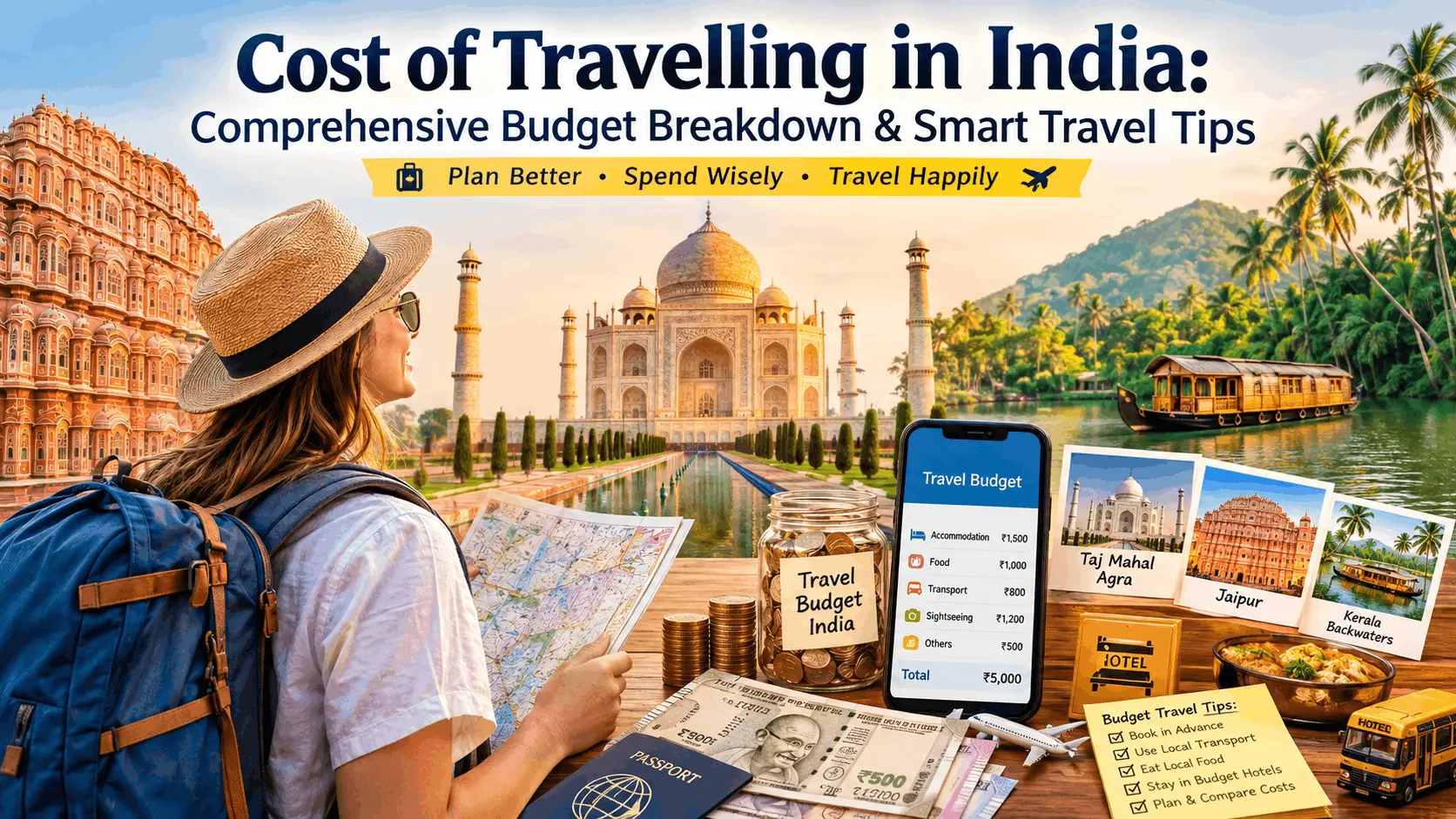
India is one of the most vibrant, culturally diverse, and visually stunning destinations in the world. From the snowcapped Himalayas up north, to the tranquil backwaters of Kerala down south, drifting through this vast subcontinent is kind of a life changing experience. Yet for a lot of international and domestic travelers, there is always this big question that pops up before they even start packing: Is India expensive to visit, or can you truly explore it on a budget
The quick answer is that India gives unmatched value for money. Whether you are a backpacking student navigating on a tight shoestring, or you are a luxury traveler who wants to rest in restored royal palaces, getting a real sense of the overall cost of traveling in India can help you plan an unforgettable trip without those annoying money surprises.
According to the latest tourism data shared by the Government of India, the country welcomed nearly 10 million foreign tourists in 2024, reflecting its growing appeal among international travelers.
In this all in one guide, we break down every component of your trip to India costs, from lodging, and getting around to meals, attractions, and those sneaky extras you don’t always think about
Breakdown of India Travel Budgets by Travel Style
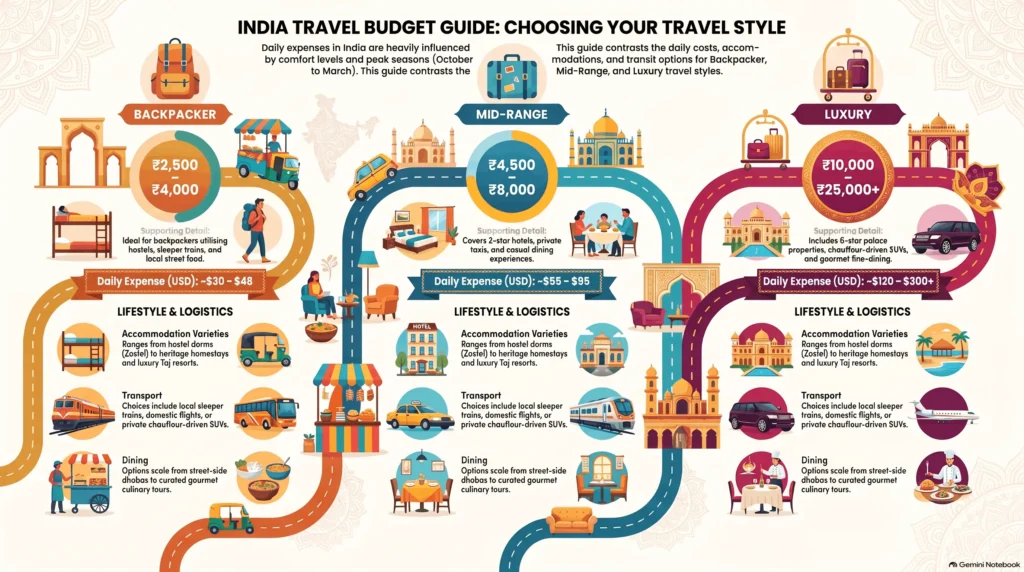
Before you dive into the very specific expense categories, it helps to understand what a typical daily India travel budget looks like across different travel styles. Prices across India can vary a lot depending on comfort level, regional taxation, and peak travel seasons which usually run from October through March.
1. The Backpacker / Budget Traveler
- Daily Expense: ₹2,500 – ₹4,000 (~$30 – $48 USD) per person
- Stay: Hostel dormitories (such as Zostel or goSTOPS) or budget guest houses.
- Transport: Sleeper class or 3AC trains, local public buses, metro systems, and shared auto-rickshaws.
- Food: Local eateries, street food stalls, and family-run dhabas.
2. The Mid-Range Traveler
- Daily Expense: ₹4,500 – ₹8,000 (~$55 – $95 USD) per person
- Stay: 3-star hotels, heritage homestays, or boutique resorts.
- Transport: Air-conditioned train classes (2AC/1AC), domestic budget flights for long routes, and private taxis or Uber/Ola for city tours.
- Food: Choose from mid-scale restaurants, casual dining cafes, and high-end treats.
3. The Luxury Traveler
- Daily Expense: ₹10,000 – ₹25,000+ (~$120 – $300+ USD) per person
- Stay: 5-star luxury hotels, heritage palace properties (like Taj or Oberoi resorts), and private villas.
- Transport: Private chauffeur-driven air-conditioned SUVs, business classes domestic flights and luxury trains.
- Food: Gourmet fine-dining, hotel dining, and curated culinary tours.
Accommodation Costs in India
Your decision to stay will make up the biggest chunk of your overall accommodation budget. Luckily, prices for lodging type things in India stay way lower than they do across Western Europe, or North America and yeah it really shows.
- Budget Hostel Dorm / Simple BnB – ₹800 – ₹1,800 ($10-$22)
- Mid-Range Boutique / 3-Star Hotel – ₹3,500 – ₹6,500 ($42-$80)
- Luxury 5-Star / Heritage Palace – ₹12,000 – ₹35,000+
Hostels & Budget Stays:
In the last ten years, newer boutique hostel groups like Zostel, Hosteller, and goSTOPS kinda changed how budget travelers move around India. Dorm beds feel secure, look modern, and usually sit somewhere between ₹800 and ₹1,500 per night, plus Wi‑Fi and those social little events that happen too.
Mid-Range & Heritage Hotels:
If you want a bit more privacy, private rooms in boutique heritage homestays (like Trident places in main cities) tend to cost roughly ₹4,000 to ₹7,000 per night. Often that also comes with a full breakfast spread, so you don’t have to think too much in the morning.
Luxury Palaces:
For anyone chasing that royal feeling, converted heritage palaces in Rajasthan or beach resorts in Goa can land anywhere from ₹15,000 up to more than ₹40,000 per night.
Cost of Food in India per Day
Indian cuisine is world-famous, full of flavor, and weirdly affordable too. Like, the real price of what you eat in India per day really swings depending on where you end up, like which spot you decide to pull up a chair at.
Average Meal Cost in India Breakdown
- Street Food & Snacks: ₹50 – ₹150 ($0.60 – $1.80 USD). If you’re out there munching samosas, chaat, dosas, or parathas from loud local stalls, you get the most real flavors at minimal price.
- Casual Local Restaurants: ₹150 – ₹350 ($1.80 – $4.20 USD). A traditional thali, meaning that wholesome platter with rice, flatbreads, lentils, curries, and yogurt, often comes with refills, and you can find it for less than $3 at many nearby places.
- Mid-Range Cafes & Restaurants: ₹400 – ₹900 ($5 – $11 USD) per meal, per person. This is a good zone for air-conditioned comfort, continental-style choices, or more specialty Indian meals, without going full splurge.
- Fine Dining & 5-Star Hotel Restaurants: ₹1,800 – ₹4,000+ ($22 – $50+ USD) per meal. And if you’re doing the average meal cost in India, budget travelers can manage to eat well on ₹500 to ₹800 daily, while mid-range travelers should plan ₹1,200 to ₹2,200 per day.
Transportation Costs Across India
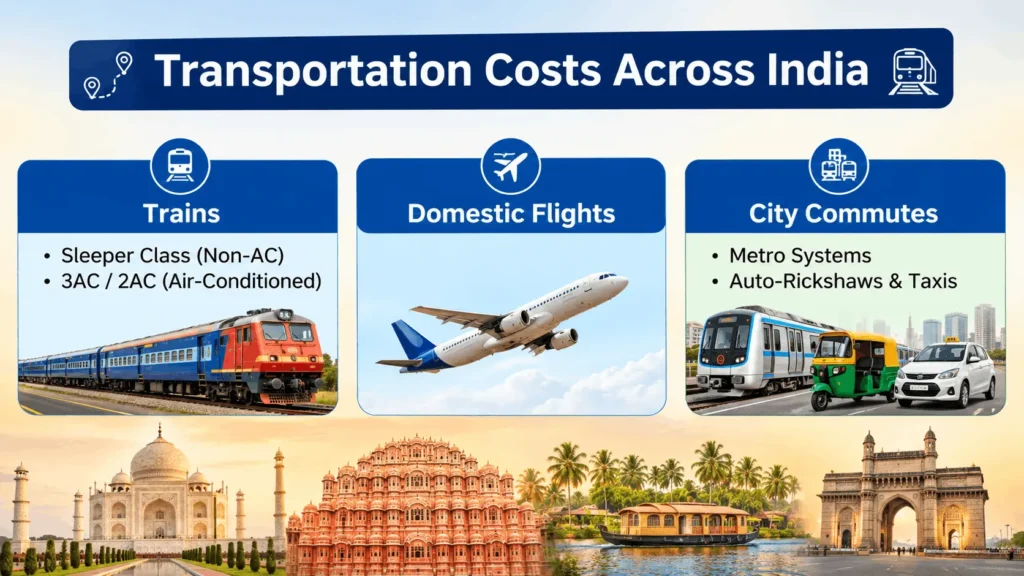
Getting around India feels a bit like a whole adventure in itself. Since the country is so massive, unable to pick the right mix of transport will mess with both your schedule, and your wallet too.
Trains
India has one of the world’s biggest rail networks. It’s affordable, quite scenic, and somehow also practical:
- Sleeper Class (Non-AC): Really inexpensive ₹200 – ₹400 for overnight trips, but it can be crowded, loud-ish, and cramped.
- 3AC / 2AC (Air-Conditioned): Usually the sweet spot for mid-range travelers, about ₹1,000 – ₹2,500 on longer routes. It’s clean and comfy, plus you get bedding.
Domestic Flights
- For long hauls, like Delhi to Kerala or Mumbai to Varanasi, budget carriers such as IndiGo, Air India Express, and SpiceJet can be a faster way to connect.
- Average Domestic Flight Ticket: roughly ₹3,000 – ₹6,500 ($36 – $80 USD) if you book about 3–4 weeks ahead.
City Commutes
- Metro Systems: New-ish subway lines in Delhi, Mumbai, Bengaluru, and Kolkata typically run ₹20 – ₹60 ($0.25 – $0.75) per trip.
- Auto-Rickshaws & Taxis: In most big cities, Uber and Ola are everywhere. A 5 km ride on an auto-rickshaw tends to be around ₹70 – ₹120, while an Uber ride is more like ₹150 – ₹300.
Sightseeing, Monument Entry Fees, and Golden Triangle Expenses
When thinking about money for sightseeing, just keep in mind that India does this dual pricing thing for old historical monuments, so foreigners usually pay much more than Indian citizens. It helps to keep the heritage places in shape while also keeping them fairly reachable for locals.
- Monument Entrance Fees: Most big UNESCO World Heritage spots end up charging roughly ₹500 to ₹1,100 (about $6–$13 USD) for foreign visitors.
- Taj Mahal (Agra): around ₹1,100 + ₹200 if you want the main mausoleum area
- Amer Fort (Jaipur): around ₹500
- Red Fort / Qutub Minar (Delhi): around ₹600 each
Read More – Taj Mahal Timings & Ticket Prices
The Golden Triangle (Delhi, Agra, and Jaipur) is probably India’s most famous tourist route. Here’s a sample cost breakdown for a 4- to 5-day run, more or less:
- Budget, Self-Guided (train/bus sort of style): ₹8,000 – ₹12,000 ($95 – $145 USD) total per person, including 2-star lodging, transport by train tickets or buses, meals, and entrance fees for key monuments in Agra and Jaipur.
- Mid-Range, Private Car + Driver: ₹22,000 – ₹35,000 ($260 – $ $420 USD) total per person, including 3/4-star “heritage” style accommodation, private air-conditioned vehicle transfers, entry fees, and hiring private local guides.
The Golden Triangle Tour Packages from Delhi will probably fall under this approximate costing that will be under your budget.
Visiting Monuments in Agra
While you’re in Agra, plan for the Taj Mahal, Agra Fort, and Mehtab Bagh, which together can land around ₹2,000 in entry tickets for each foreign adult, give or take depending on what exactly you select.
Everyday Price of Goods and Daily Essentials
Understanding the general price of goods in India helps you manage incidental daily spending without overpaying:
- 1.5L Bottled Water: ₹20 ($0.24 USD)
- Local SIM Card with 1.5GB/day data (30 days): ₹300 – ₹450 ($3.60 – $5.40 USD)
- Cup of Street Chai: ₹10 – ₹20 ($0.12 – $0.24 USD)
- Sunscreen / Toiletries: ₹250 – ₹500 ($3.00 – $6.00 USD)
- Custom Tailored Shirt/Dress: ₹1,200 – ₹2,500 ($14 – $30 USD)
Overall, the day-to-day cost of things in India remains remarkably affordable, making incidental shopping and snacking easy on your pocket.
Step-by-Step: How to Plan a Trip to India on a Budget?
Knowing how to plan a trip to India in a smart way, really can save you hundreds of dollars, and also make the whole experience smoother.
Pick the right season, for example traveling during the shoulder months, like September–October or April–May, usually comes with cheaper flight prices and hotel offers than when you go during the busiest December–January period.
Book train tickets early:
Indian Railway tickets often open 60 to 120 days before, and they can get full fast. Try to use the official portals (IRCTC) or authorized partner apps, to grab AC class seats sooner.
Use UPI and digital payments, but still carry small cash:
Everywhere in cities, it still feels necessary to have some small notes, like ₹20, ₹50, ₹100. This helps for street food, little snacks, and those auto rickshaw fees.
Get an e-visa online:
Apply for the official Indian e-Tourist Visa using the government portal, and do it well before your departure. The total cost is usually around $10 to $80, and it changes depending on nationality and length of stay.
Get travel insurance:
Health coverage plus trip-cancellation protection helps if there’s a medical issue, a flight gets delayed, or luggage goes missing.
Frequently Asked Questions
1.Is India expensive for foreign tourists?
India is often seen as one of the most budget-friendly destinations worldwide. Foreign visitors may pay higher monument entry fees than locals, but day to day spending for places to stay, transportation, and meals usually stays far below the cost levels you’d see in many Western countries.
2.How much cash should I carry per day in India?
A decent range is about ₹1,500 to ₹3,000 per day. This is enough for small purchases, street food, tipping, and rickshaw rides. Bigger hotels, supermarkets, and mid to high-end restaurants also commonly take international credit or debit cards, so you’re not limited only to cash.
3. What’s the average Golden Triangle tour cost coming out of Delhi ?
Usually a standard 4- to 5-day, mid-range Golden Triangle trip (Delhi, Agra, Jaipur) with a private AC driver , plus 3- or 4-star heritage type stays, and also monument ticket entries included kind of thing, you’ll commonly see prices around ₹22,000 to ₹35,000 , per person ($260 – $420 USD).
Ready to Experience the real Magic of India
Building your dream India escape doesn’t really need to feel chaotic or costly. From lively old-world bazaars to quiet hill station getaways, the country delivers value-packed journeys designed for every budget. Book your journey with us and enjoy an unforgettable adventure to India.

Jumman Khan
Jumman Khan is the CEO of Taj Destination Tours with 15+ years of expertise in creating unforgettable travel experiences across India. Since 2017, he has guided 8,000+ travelers through customized Golden Triangle, Rajasthan, and luxury tour packages.